Who are FloWave?
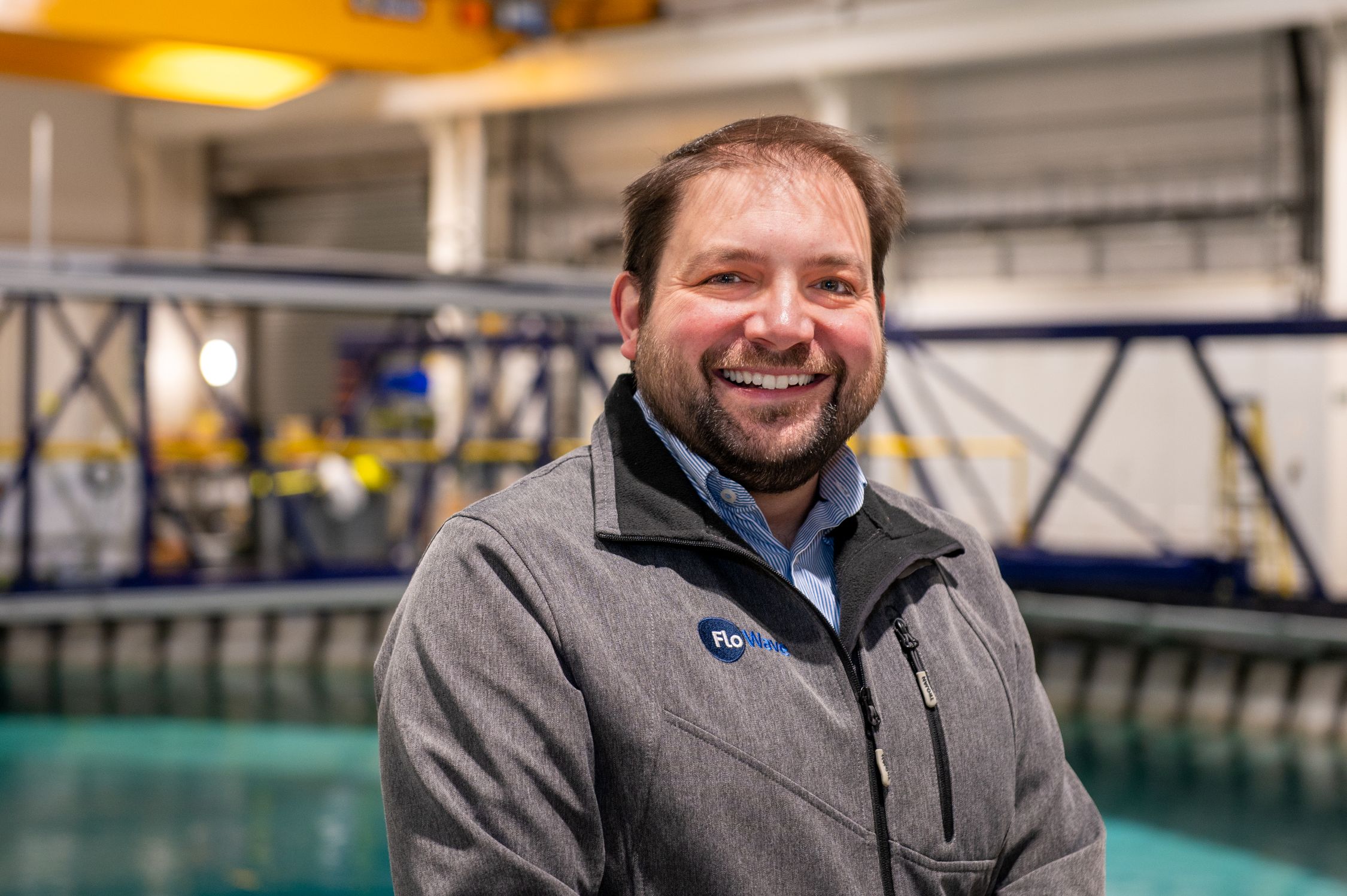
The FloWave offshore renewable testing facility is a cutting-edge simulation tank attached to the University of Edinburgh, serving a variety of industrial and academic clients. Testing with this equipment is the closest thing you can get to simulating sea conditions without being in the open ocean. Thomas Davey is the Principal Experimental Officer, meaning he oversees the day to day running of the facility. In this role he deals with everything from the technical elements of operating the equipment, right through to the more strategic and outward facing work of the organisation. Through this role Thomas has now supervised three IDCORE research engineers, and speaks to the benefits of sponsorship, both for the technical and strategic aspects of the organisation’s work.
From Thomas:
‘I have been impressed by the technical capabilities of the IDCORE researchers I have worked with. This has been an important attribute for FloWave as our work is very project based. The students have been required to deliver good results on short turnarounds, and their training and abilities leave them well able to deliver this kind of work. They’re keen to get stuck in with the hands-on, on-site work and their skills are highly complementary to those of the rest of the team.’
As well as this more short-term, project-based work, the IDCORE researchers also deliver technical value to the facility through their extended research (e.g. manuals for best practice when testing floating offshore renewables). Thomas is also keen to highlight how well these students have integrated into the wider team, collaborating and helping to bounce ideas off one another. He sees this as a key advantage of the IDCORE program and a testament to the quality of the students they produce.
Longer-term benefits
Despite FloWave being attached to the University of Edinburgh, Thomas thinks that working with IDCORE has helped them maintain stronger working relationships with academia. He sees the value in having access to the best current knowledge produced within academic institutions, and feels these students are good way of accessing that knowledge. Both FloWave and IDCORE came into existence at a similar time and have been engaging with each other right from the start. Thomas feels that this has helped shape a positive culture of collaboration within the organisation, something he his keen to continue. Additionally, the strong networks formed within the IDCORE cohorts themselves are invaluable. They give FloWave access not only to academic institutions, but the other industrial partners in which students are placed. These connections are long-term and fundamental to the way IDCORE operates, making them an attractive investment.
What needs could IDCORE be fulfilling?
Thomas feels that there is a need in the offshore renewable industry to stop siloing the different modes of offshore renewables (wind, wave, tidal, etc.) and start viewing the sector more cohesively. There are many interactions and similarities between the different technologies and a more joined up approach could help advance innovation. IDCORE can help with through the training they offer and connections they cultivate. Students are taught with an integrated view of the offshore renewable sector, each learning about a broad range of technologies and issues facing the industry. They form strong relationships with each other, with the potential to facilitate better communication across the sector. Thomas wonders whether such an aim could be made more formal with working groups of students, operating across several different projects and industrial partners.
What have IDCORE got to get right?
Thomas feels that the centre has to continue attracting hight quality students. Students who aren’t just intelligent but highly self-motivate, self-starting, and happy to dive in head-first to the work of their sponsorship organisation. Such students create the host of short- and long-term benefits described above, and these must be sold to the industrial partners. When well-articulated, this is a highly attractive offering and investment for all sorts of organisations. These students become well integrated and help solve your problems, they’re also there for the long haul, helping both your organisation’s strategy and culture.