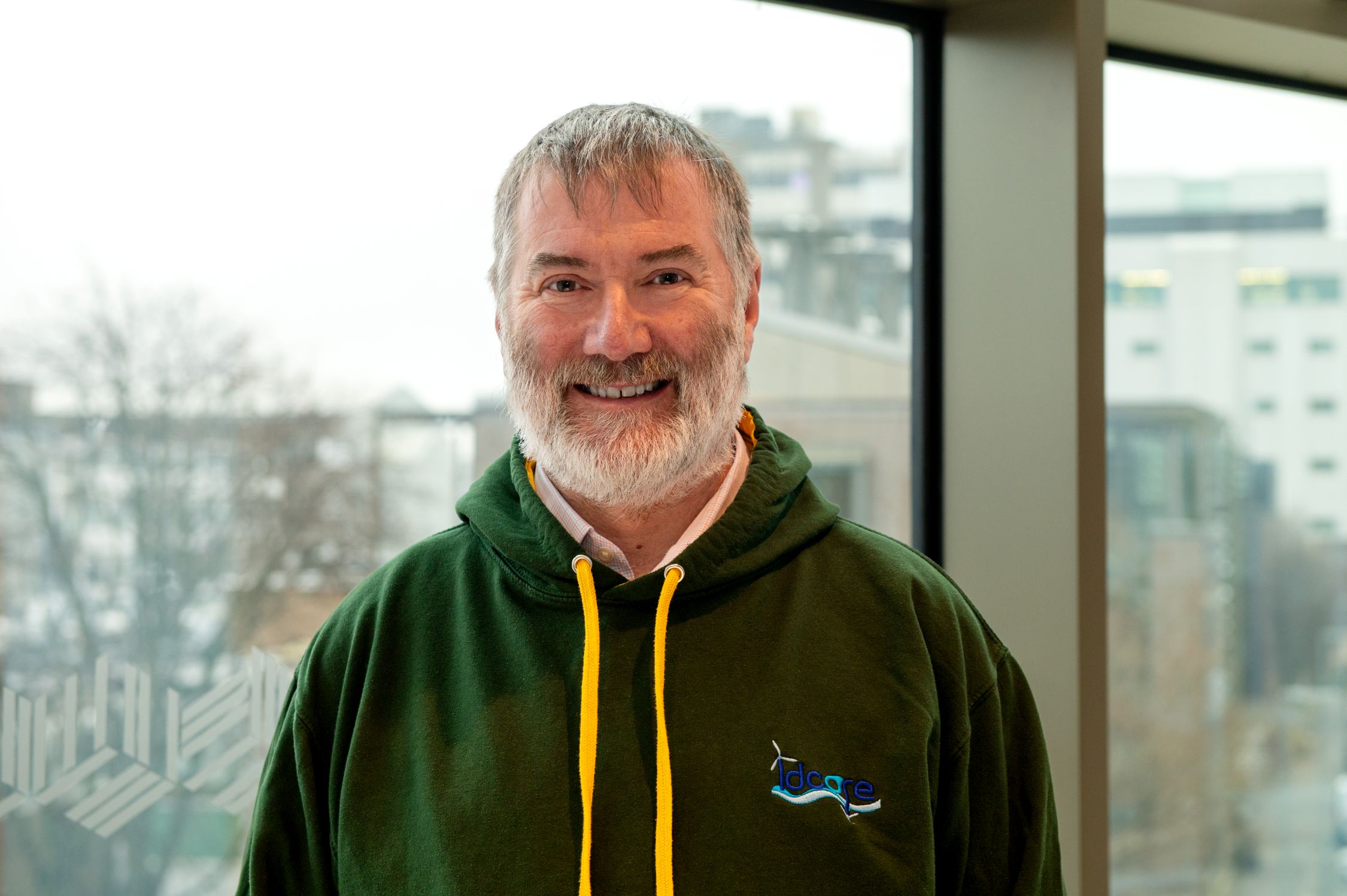
From David
“It has been a fantastic privilege and a great pleasure to lead IDCORE. We set the Centre up in the belief that the sector needed the training and research support we have been able to deliver. We have succeeded in creating real impact, the sort that only comes from working on industry led projects.
The diversity in the offshore renewable energy sector creates a wide range of research challenges – huge variations in technology, stages of development and commercial success. What is more, participants in the sector recognise the value of engaging with academia to help them address those challenges, and we have been able to make a real difference to their businesses. We have had projects that have saved sponsor millions of pounds, we have helped others radically improve their installation, operations and maintenance processes, and we continue to support the cutting-edge advances in technology that the sector continues to make.
Most importantly, though, we are training people… highly skilled engineers who will in the future lead the industry and ensure that the UK delivers on its target of being net zero in 2050.”
IDCORE – a unique programme
For over fifteen years, as Centre Director, David has been responsible for shaping, developing and leading a unique Centre that has been so effective at engaging industry partners that IDCORE projects regularly feature in impact case studies. There are now very few pure EngD programmes in the UK, but the model works. It is not just the industry engagement that makes IDCORE stand out, the training programme is unique too, creating a breadth of skills in the participants that is sought after by project sponsors. David and the IDCORE Leadership Team have also put a lot of effort into designing the programme to deliver strong cohort building during the first year of training, creating a vital support network for the researchers when they are delivering their research projects.
In addition to being Centre Director, David delivers part of the taught programme and provides academic supervision for a number of IDCORE projects. The original concept for a PhD training programme in offshore renewables had been through several iterations before the funding for IDCORE was secured, so the programme was well thought. However, it has continued to evolve as the industry has developed and, most important from David’s perspective, he continues to enjoy it – “It’s been a fun and very satisfying part of my role in the University”.
Wider Responsibilities
David is a Mathematician by background and developed his career in offshore renewables on the back of his interests in mathematical modelling and simulation of the behaviour of fluids, using tools like Computational Fluid Dynamics (CFD). As a senior academic at the University of Edinburgh, David’s recent work has included the development of standards and protocols for marine energy systems, including procedures for quality-assured scale testing of devices using both physical test facilities and computational models.
Alongside IDCORE, David is the Director of FloWave, the University’s state-of-the-art wave and current simulation tank for use in the testing and development of novel ocean energy technologies. He was instrumental in the design of the hydrodynamic systems for FloWave, and is Principal Investigator for a number of EPSRC projects that use the facility.
He is also the Director of Diversity and Inclusion for the School of Engineering.
Impact of IDCORE
Running IDCORE has allowed David to build strong relationships with developers and technology companies which has led to a number of other significant research projects, as well as developing the client-base for FloWave. Some IDCORE projects have also had a direct impact on the development of FloWave, developing new methodologies and test regimes for the facility, creating a broader ‘library’ of sea states for testing under both operational and extreme weather conditions, and in one case directly supporting the development of a new wave energy device concept.
But it is not just the technical successes that David reflects on, it is also experiences like going to a conference where presentations from IDCORE researchers and alumni dominate whole sessions because they have been invited by the conference organisers, and then seeing them walk away with all the prizes.
Future
IDCORE is making a difference, the need for the training it provides has not reduced, if anything it has grown, so David is determined to keep IDCORE running for as long as that need exists. He knows that the training will continue to evolve as the project partners and delivery team change, but he believes that success will require IDCORE to remain true to its original vision of ‘delivering the next generation of leaders for the offshore renewable energy sector’.
David describes IDCORE and FloWave as two amazing achievements in his career, but of the two it is IDCORE that makes him the most proud.