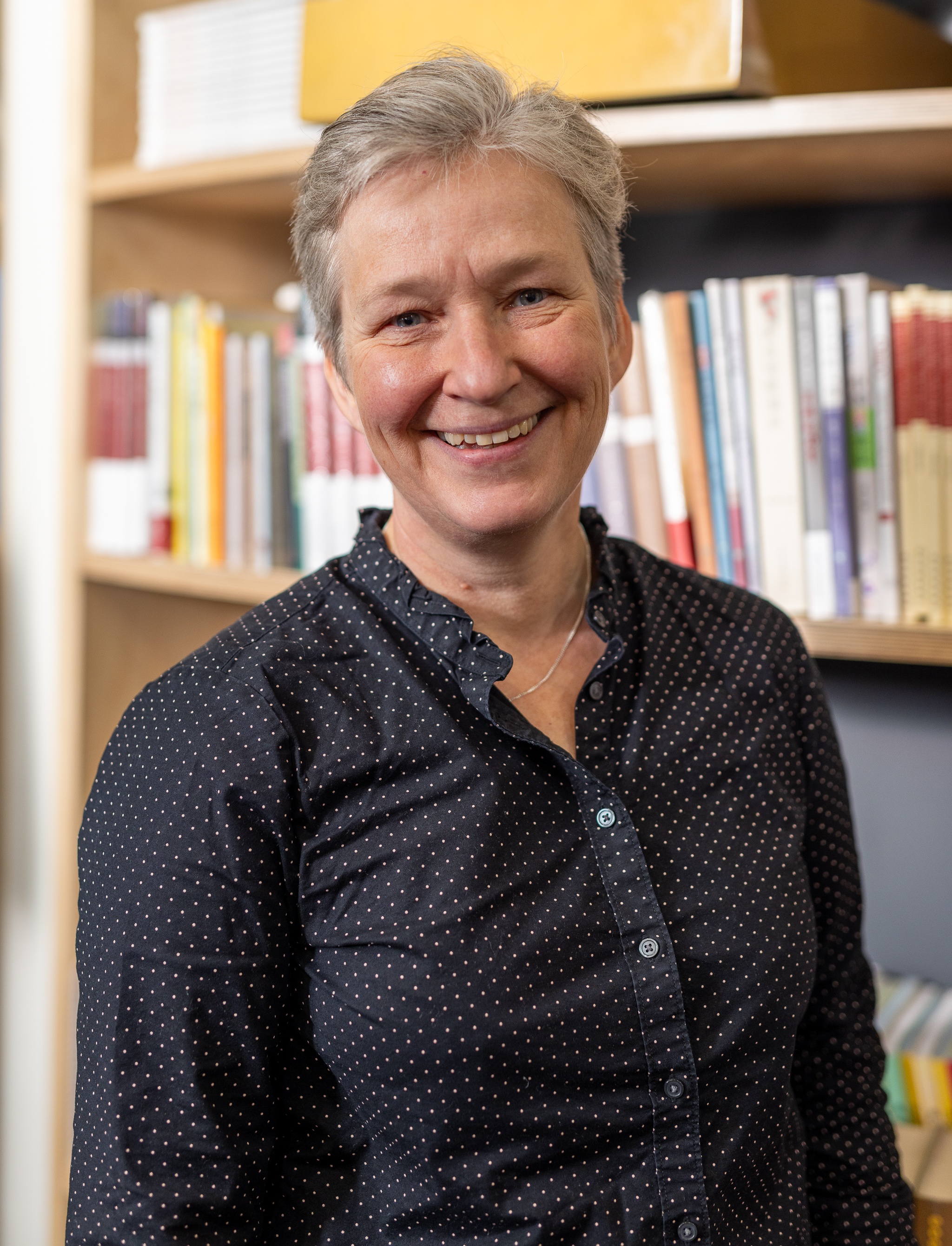
Equality, Diversity and Inclusion
During Phase 2 of IDCORE Julia was the Co-Director with responsibility for equality, diversity and inclusion. In Phase 3 this role has been taken on by one of the earlier career researchers who have joined the Management Team, but she stills takes a keen interest in the issues.
Applications from students wishing to join IDCORE suggest that the programme has been particularly successful in attracting traditionally under-represented communities to participate. Julia wants to understand why this is, so that the lessons can be applied more widely. She is also keen to explore how the experience and expertise of existing IDCORE students can be used to help and influence potential students more.
Alongside her role as Co-Director of IDCORE, Julia is Professor of Subsea and Pipeline Engineering in the Department of Naval Architecture, Ocean and Marine Engineering at the University of Strathclyde, where she is also Vice Dean (Academic) in the Faculty of Engineering. Prior to pursuing an academic career, she worked for over 20 years as a materials and structural integrity engineer in the petrochemical, power generation, and oil and gas industries. In academia, her research interests have diversified to include material responses in subsea and renewable energy structures and the potential for reuse of offshore infrastructure to deliver pathways to net zero through, for instance, the generation and transportation of green hydrogen. Expertise from oil and gas is proving to be very important in the development of offshore renewable energy, and Julia has the advantage of having worked in both industries.
From Julia
“The first IDCORE project I supervised was delivered by a researcher whose background was in biology rather than engineering. It was a project focused on corrosion and fouling, and it opened up a whole new area of application for my own research.
This highlights one of the many benefits of IDCORE – our researchers come in with a range of backgrounds and it is great to be part of their progression from saying ‘I am a chemist’ to ‘I am a research engineer with an important role to play in the delivery of net zero.’ At the same time, they influence and inform us as the academics supervising them.
I really believe that what we are doing is making a difference, and the destinations of our graduates show that IDCORE researchers are out there changing things. I am doing everything I can to make sure that this continues to be the case.
We are attracting high quality individuals – they are confident ‘self-starters’ who believe they can change things and make a difference, and this is inspiring, because it is not only a pipe dream or wild ambition but has demonstrated by so many of our graduates to be achievable.”
Project Supervision
Because of her background, the IDCORE projects that Julia has supervised have tended to focus on the relationship between renewable energy and hydrogen as a way of delivering net zero. The nature of these projects has undoubtedly helped Julia develop her own relationships with the industrial partners involved. They have created interactions that wouldn’t have happened by other routes helping to establish a track record with the partners far more quickly.
Some partner companies have very clear ideas about the projects they want to sponsor. Others are more ‘fluid’ in their approach, allowing the researchers to develop questions to explore in the context of the company’s needs, helping the to build up their in-house expertise. In some cases this has led to IDCORE researchers working together on specific concepts, a process that is helped by the Centre’s efforts in cohort development.
The outputs of these projects have informed Julia’s own research, and the knowledge the researchers gather through their reading and attendance of conferences and seminars also help to keep her ‘up to speed’ with the latest developments in the sector.
In addition, co-supervision across different institutions opens up opportunities outside of normal routes for collaboration. The network of supervisors across IDCORE projects has helped Julia develop these connections and has led on to other collaborative work.